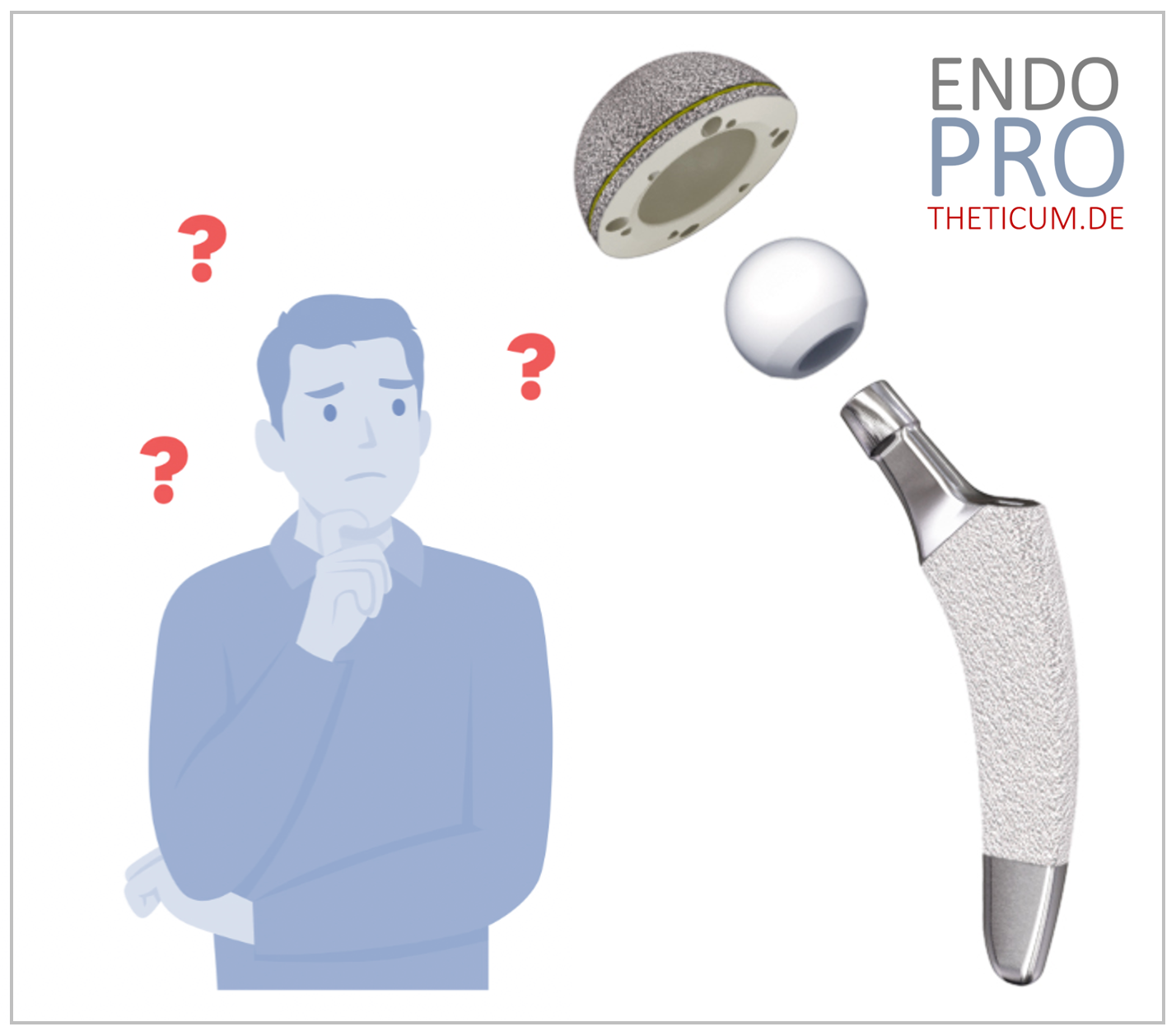
Motorcycling with Artificial Joint – Biking with Hip Replacement or Knee Replacement
Hip Replacement (Hip TEP), Knee Replacement (Knee TEP) and Motorcycling: Your Guide to Safe Return
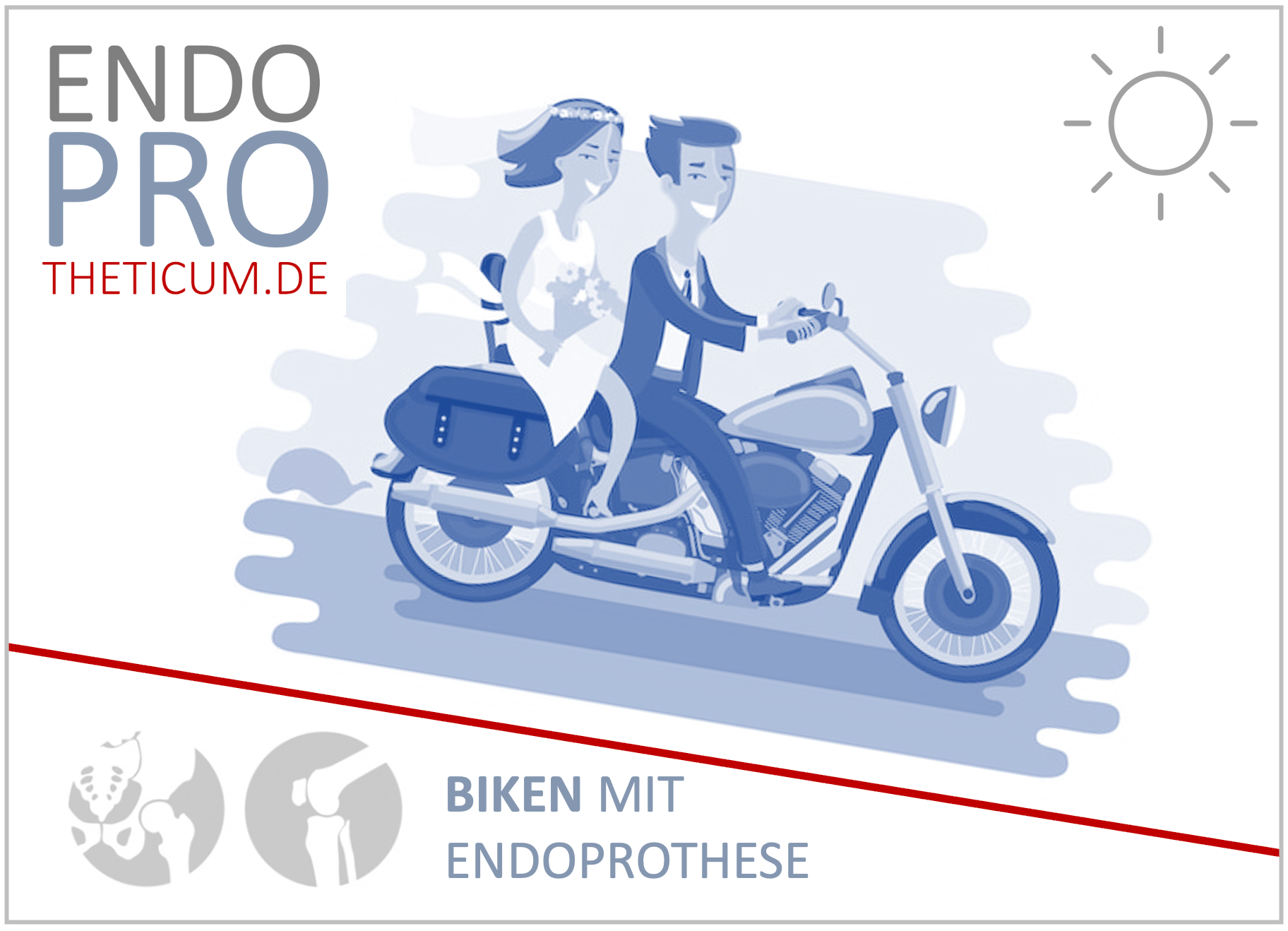
The New Freedom Despite Artificial Joint
An artificial joint is no longer a barrier to an active life today. On the contrary: After a successful implantation of a hip replacement (Hip TEP) or knee replacement (Knee TEP), many people not only return to daily activities – they also passionately resume their hobbies like motorcycling.
In this article, you will learn why biking with an artificial joint is safe today, what benefits modern prosthetics offer, and what you should pay attention to for a successful return to the bike.
Motorcycling after Joint Replacement: What's Possible Today
Advances in Endoprosthetics: Modern Prosthetics at a Glance
In the last 20 years, endoprosthetics has revolutionized. Artificial joints are now smaller, more resilient, and anatomically more adaptable than ever before. Advances in materials such as ceramic and highly cross-linked polyethylene ensure that modern hip and knee prosthetics are extremely abrasion-resistant and durable.
What does this mean for motorcyclists?
- Higher Load Capacity: Even with stronger movements, the artificial joint remains stable.
- More Natural Movement Pattern: Important for balancing and operating a motorcycle.
- Lower Risk of Complications: Especially when getting on or off or with jerky movements.
Conclusion: Those who receive a hip or knee prosthesis today benefit from a technology designed for activity – including biking!
Why motorcycling with endoprosthesis is safer today than ever before
Previously, riding a motorcycle with an artificial joint was often a taboo topic. People feared dislocations or severe wear and tear. Those days are over. Modern prostheses are used minimally invasively, have shorter stems (especially with hip prostheses), and use load-resistant gliding pairs. The risk of dislocation is thus reduced to a minimum.
Important facts:
- According to current study findings, there is no increased risk if patients follow the basic recommendations.
- Technical advances in safety on the motorcycle itself (e.g., ABS, traction control) support a safe return to riding.
Hip prosthesis (hip replacement) and motorcycle riding: What you need to know
Resilience of the hip prosthesis in everyday life and on the motorcycle
A modern hip prosthesis (hip replacement) withstands everyday and sporting loads very well. The crucial factor is the correct healing phase. After about 6 to 12 weeks, the implant is usually fully integrated, making dynamic loads like motorcycling possible again.
What you should consider:
- Strength training for the leg muscles supports joint guidance.
- Coordination training improves balance and stability on the motorcycle.
- Gentle movements when getting on and off prevent unnecessary load peaks.
Dislocation risk when biking: Are there still dangers?
Thanks to anatomical implant models and tissue-sparing surgical methods, the dislocation risk with hip prosthesis is now extremely low. Nevertheless, a certain degree of caution is important:
- No extremely wide spreading movements when getting on.
- Crash prevention through safe driving behavior and training.
Tip: A lower motorcycle or a lowered seat makes getting on much easier.
Knee Replacement (Knee Arthroplasty) and Motorcycling: What Matters
Stability and Mobility of the Knee Joint on the Bike
After a knee replacement (knee arthroplasty), the restoration of full mobility often takes a bit longer than with hip replacement. Nevertheless, motorcycling is usually possible without problems.
What Matters:
- Adequate Flexion: At least 90–100 degrees should be achieved to allow for comfortable sitting.
- Stability when Supporting: Especially in stop-and-go traffic or when cornering, secure support with the leg is essential.
Tips for Getting On and Off with a Knee Replacement
- Use Footrests: Many motorcycles can be retrofitted with small footboards.
- Wear Non-Slip Shoes: Particularly important on wet surfaces.
- Practice Movement Sequences beforehand at home or on a stationary motorcycle.
Benefits of Short-Stem Prostheses for Active Motorcyclists
What are short stem prostheses?
Short-stem prostheses are modern hip implants that require less bone removal than traditional long-stem prostheses. The prosthesis is anchored mainly in the upper part of the femur, which better supports the natural movement.
Particularly for active people like motorcyclists, a short-stem prosthesis offers clear advantages:
- More natural movement: More freedom when bending, turning, and stabilizing on the bike.
- Lower risk of dislocation: Anatomical design for better joint guidance.
- Better load-bearing capacity: Also during dynamic movements like accelerating or braking.
- Bone preservation: If a revision is necessary later, more bone material remains.
Conclusion: Those who want to ride motorcycles again as soon as possible should seek advice on short-stem prostheses at ENDOPROTHETICUM!
Motorcycling after surgery: The right time to get back on the bike
When can you ride a motorcycle again after hip or knee replacement surgery?
Hip prosthesis (hip replacement):
- Typically 6–10 weeks after surgery, depending on the healing process and individual fitness.
- A thorough physiotherapeutic rehabilitation is a prerequisite.
Knee prosthesis (knee replacement):
- Typically 8–12 weeks after surgery.
- Mobility (at least 90 degrees flexion) and sufficient muscle strength are important.
Factors influencing the timing:
- General Fitness
- Healing of muscles and tendons
- Mobility of the joint
- Balance and coordination
- Type of motorcycle (e.g., weight, height)
Tip: Before the first ride, a doctor or physiotherapist should give the green light!
Safe on the bike: Important tips for motorcyclists with endoprosthesis
Preparation is everything: Safety starts at home
- Ride safety training for re-riders to book.
- Movement sequences like getting on and off or shifting gears to practice specifically.
- Choose a suitable motorcycle: Lighter, lower, possibly with shift assistance (e.g., quickshifter).
Important equipment:
- Non-slip motorcycle boots for a firm stand.
- Comfortable seat with sufficient padding.
- Back protectors and knee protectors for additional safety.
Stress from motorcycling: What does science say?
Study situation on the stress on the artificial joint
Several studies have shown that normal daily activities like walking, cycling, or motorcycling do not negatively affect the lifespan of an endoprosthesis .
On the contrary: Moderate exercise is even recommended as it activates the synovial fluid (synovia) and supports cartilage metabolism.
Stress from motorcycling in comparison:
Walking: 1.3–1.5 times body weight
Cycling: 1.0–1.2 times body weight
Motorcycling (sitting): 1.2 times body weight
Result: Motorcycling does not pose excessive stress on hip or knee prostheses.
Common fears when motorcycling with an artificial joint
Fear No. 1: What if I crash?
Naturally, there is always a residual risk when motorcycling. But:
- Severe crashes do not automatically lead to loosening or damage to the prosthesis.
- Good protective clothing and defensive driving significantly minimize the risk.
Tip: Initially resume motorcycling on closed terrain or training areas.
Fear No. 2: What if I can't react quickly enough?
After successful rehabilitation, patients generally regain their full reaction ability.
Exercises that help:
- Balance training
- Reaction exercises with physiotherapists
- Coordination training on balance boards
Special requirements depending on motorcycle type
Chopper, Tourer, or Enduro?
Not every motorcycle is equally suitable. Here is a brief overview:
- Chopper: Low seat, heavier, but easy to handle on straight stretches.
- Tourer: Comfortable for long distances; note higher weight when maneuvering.
- Enduro: Light and agile, but often high seat position – only recommended for experienced riders with prosthetics.
Ideal bike for re-entry: Light naked bike or small tourer with low center of gravity.
Rehabilitation and training specifically for motorcyclists
The best exercises after hip replacement or knee replacement
- Squats (with mini-band): Strengthening of the thigh muscles.
- Single-leg stand: Improvement of balance.
- Calf raises: Support of stability in the ankle joint.
- Core training: Core stability for better handling of the motorcycle.
Psychological aspects: Gaining courage after surgery
Motorcycling starts in the mind
Many patients report that the biggest challenge is not the physical healing, but the mental return.
Common thoughts:
- “What if I can't react quickly enough?”
- “What if I don't hold my leg stable enough?”
- “What if I get pain?”
These concerns are completely normal. What's important is to take it step by step and approach gradually.
Tips for more self-confidence:
- Create success experiences: First drive short, safe stretches.
- Have realistic expectations: Perfect driving technique takes time.
- Mental training: Visualize yourself riding a motorcycle safely.
- Exchange with other affected individuals: Experience communities and forums help enormously.
Note: Self-confidence returns with every curve driven!
Long-term tips for bikers with hip or knee prosthesis
1. Regularly check seating position
The more comfortable and relaxed you sit, the less strain you feel in your hip or knee.
Pay attention to:
- Upright posture
- Knees slightly bent
- No overextension of the hip joints
2. Plan breaks
Longer tours? Super! But:
- Take a short break after a maximum of 60–90 minutes.
- Loosen legs, move joints, activate circulation.
3. Choose joint-friendly routes
- Curvy country roads are often more pleasant than highway stretches.
- Avoid potholes and cobblestones if possible.
4. Regularly check health
- Attend follow-up examinations of the prosthesis.
- Pay attention to warning signs: e.g. pain, instability or swelling.
Experience reports: Motorcyclists tell their stories
Jan (57) – Right hip prosthesis, return after 6 months
“After the surgery, I was initially uncertain. But with physiotherapy and driving training, I managed to do it. Today I drive tours up to 400 km at a stretch – pain-free! My tip: Listen to your body and don't get back on the bike too soon.”
Petra (48) – Left knee replacement, sport enduro rider
“I thought I'd never go enduro riding again. But my doctor gave me courage. With an adjusted suspension and breaks, it even works better than before. The prosthesis is more stable than my old knee!”
Thomas (62) – Bilateral hip replacement, Harley rider
“Two new hips and still riding a Harley? No problem! What was important to me was a low seat and a lot of core training. Today I cruise more relaxed than ever.”
Checklist for the first trip after surgery
✅ Medical clearance obtained
✅ Motorcycle adjusted to suitable seat height and weight
✅ Protective clothing checked and adjusted
✅ First route known and chosen with low traffic
✅ Regular breaks planned
✅ Mobile phone ready for emergencies
✅ Realistic expectations set
✅ Plenty of motivation and joy packed!
FAQs – Motorcycling with an artificial joint
Can I ride a motorcycle safely again with a hip prosthesis?
Yes! After completing rehabilitation and with adapted equipment, there is nothing to prevent safe motorcycling. The risk of dislocation is very low thanks to modern prosthetics.
How long do I have to wait after surgery before riding again?
This depends on the individual healing process. On average:
- Hip prosthesis: 6–10 weeks
- Knee prosthesis: 8–12 weeks
Important: Always consult with the treating physician first.
Are there specific motorcycles that are more suitable?
Yes. Recommended are motorcycles with:
- Low seat height
- Easy handling
- As little weight as possible
Naked bikes, small tourers or cruisers are good options for getting back into riding.
How can I protect my new joint while driving?
- Wear good protective clothing
- Sit correctly
- Take regular breaks
- Move joints regularly
- Strengthen core muscles
What happens if I fall despite having an artificial joint?
A fall does not automatically mean damage to the prosthesis. Modern implants are very stable. Nevertheless, you should see a doctor after a fall as a precaution.
Conclusion: Riding a motorcycle with hip or knee prosthesis – safely back on the road
Riding a motorcycle with an artificial joint is now safely possible thanks to modern medical technology and individual rehabilitation. Anyone who has a hip replacement (hip arthroplasty) or knee replacement (knee arthroplasty) does not have to give up their beloved motorcycling . On the contrary: With a well-fitted short-stem prosthesis and targeted training, you can be back on the motorcycle safely and with joy just a few months after surgery.
The most important points at a glance:
- The strain of motorcycling is not critical for modern prosthetics.
- The risk of dislocation is greatly reduced today with new implants like short-stem prostheses.
- Individual timing is crucial: Monitor the healing process and follow the doctor's approval.
- Safety comes first: Adjust the motorcycle, wear good protective gear, and listen to your body's signals.
- Psychological preparation helps to reduce anxiety and build confidence in your abilities.
Whether it's a leisurely tour or sporty biking: With a bit of patience, training, and good preparation, there's nothing to stop the fun of riding. Discuss with your doctor, listen to your body – and soon enjoy the freedom on two wheels again!
Make an Appointment?
You can easily make an appointment both by phoneand online .


ENDOPROTHETICUM - The whole world of endoprosthetics