Femoral head necrosis and hip replacement: Treatment options and prospects for success
Treatment of femoral head necrosis using hip replacement (hip prosthesis)

Femoral head necrosis, also known as avascular necrosis, is a serious condition in which the hip joint is damaged due to inadequate blood supply. This can lead to significant pain and limited mobility. A total hip replacement (THR) is often the best solution to restore the quality of life for those affected. In this blog, we will summarize the most important information on femoral head necrosis, treatment options, and the prospects of success for a THR.
What is femoral head necrosis?
Hip osteonecrosis, also known as avascular necrosis (AVN) or aseptic necrosis, is a condition in which the bone tissue in the femoral head dies due to inadequate blood supply. This can be caused by various factors such as trauma, certain medications (e.g., corticosteroids), alcohol abuse, and diseases like lupus erythematosus. The condition can occur at any age but is more common in people between 30 and 50 years old.
Causes and risk factors of avascular necrosis of the femoral head
The development of femoral head necrosis is multifactorial and can be triggered by a variety of causes and risk factors. The most important ones include:
- Traumatic causes:
- Fractures: Fractures in the area of the femoral neck or femoral head can damage the blood vessels that supply the femoral head, thus causing femoral head necrosis.
- Dislocations: Dislocations of the hip joint can impair blood supply and lead to necrosis.
- Non-traumatic causes:
- Corticosteroid therapy: Long-term or high-dose intake of corticosteroids can increase the risk of femoral head necrosis. The exact mechanism is not fully understood, but corticosteroids can promote fat accumulation in blood vessels and alter their permeability, leading to ischemia.
- Alcohol abuse: Chronic alcohol consumption can alter blood clotting and blood lipid levels, leading to damage to blood vessels and reduced blood flow to the femoral head.
- Certain diseases: Conditions such as lupus erythematosus, sickle cell anemia, and other systemic diseases can increase the risk of femoral head necrosis.
- Idiopathic causes:
- In many cases, the exact cause of femoral head necrosis remains unknown (idiopathic). It is suspected that genetic factors and individual susceptibility may play a role.
Pathophysiology of femoral head necrosis
The pathophysiology of femoral head necrosis involves several stages:
- Ischemia:
- The disrupted blood supply leads to ischemia, meaning that the tissue is not adequately supplied with oxygen and nutrients. This leads to the death of bone cells (osteocytes).
- Bone resorption and remodeling:
- After cell death, the body begins to break down the dead bone tissue and attempts to replace it with new bone tissue. However, this remodeling process is often inadequate, leading to weakening and instability of the femoral head.
- Collapse of the femoral head:
- Without adequate repair mechanisms, the weakened femoral head collapses under the weight and load of the body. This leads to deformities and a deterioration of joint function.
- Arthritis and joint destruction:
- The collapse of the femoral head leads to secondary osteoarthritis, a degenerative joint disease that is accompanied by pain, stiffness, and limited mobility. The joint surfaces become uneven and the cartilage is worn away, further exacerbating the symptoms.
Prevention and early detection of femoral head necrosis
For the prevention and early detection of femoral head necrosis, some measures and considerations are important:
- Regular medical check-ups: Individuals with risk factors such as corticosteroid therapy or alcohol abuse should undergo regular medical examinations to detect changes in the hip joint early on.
- Early intervention: At the first signs of hip pain or limited mobility, a doctor should be consulted immediately to enable early diagnosis and treatment.
- Healthy lifestyle: Avoiding excessive alcohol consumption and a balanced diet can reduce the risk of femoral head necrosis.
Femoral head necrosis is a serious condition that can lead to severe complications if left untreated. Early diagnosis and appropriate therapeutic measures, including the possibility of total hip arthroplasty, can significantly improve the quality of life and mobility of those affected.
Symptoms and diagnosis of femoral head necrosis
The symptoms of femoral head necrosis often develop insidiously and may initially remain unnoticed. The most common symptoms include:
- Pain in the groin, thigh, or buttock
- Stiffness and limited mobility of the hip joint
- Pain that increases when walking or putting weight on the hip joint
Various imaging techniques are used to diagnose femoral head necrosis, including:
- X-rays
- Magnetic Resonance Imaging (MRI)
- Computed Tomography (CT): These examinations help determine the extent of the damage and the stage of the disease.
Conservative treatment options for femoral head necrosis
In the early stages of avascular necrosis of the femoral head, conservative treatment methods can be considered. These aim to alleviate symptoms and slow the progression of the disease. Conservative treatment options include:
- Pain medication: Nonsteroidal anti-inflammatory drugs (NSAIDs) and other pain medications can be used to relieve pain.
- Physical therapy: Exercises to strengthen the hip muscles and improve mobility.
- Load reduction: Use of walking aids such as crutches to relieve the hip joint.
- Lifestyle changes: Reduction of risk factors such as alcohol and tobacco consumption.
Surgical treatment options for femoral head necrosis
If conservative measures are insufficient or the condition is already advanced, surgical interventions may be necessary. Common surgical procedures include:
- Core decompression: A minimally invasive procedure in which small holes are drilled into the femoral head to improve blood supply.
- Bone grafting: Transplantation of bone tissue to stabilize the damaged area.
- Total hip replacement (THR): The complete replacement of the hip joint with an artificial joint. This method is often considered the best option for advanced femoral head necrosis.
Hip replacement: The path to pain-free living with femoral head necrosis
Total hip replacement is a proven procedure for treating femoral head necrosis. The damaged hip joint is replaced with an artificial joint made of metal, plastic, or ceramic. The THR offers numerous benefits:
- Pain reduction: Most patients report a significant reduction in pain after surgery.
- Improved mobility: The range of motion of the hip joint is significantly improved.
- Increased quality of life: Patients can lead a more active life and perform daily activities without pain.
Preparation for hip replacement
Preparation for a hip replacement involves several steps to ensure the best possible treatment outcome:
- Preoperative examinations: To assess the patient's general health and identify potential risk factors.
- Patient education: Education on the course of the operation, postoperative measures, and expected outcomes.
- Physiotherapy: Physiotherapeutic measures can be initiated even before the operation to strengthen the musculature and promote recovery.
The surgical intervention
The surgical procedure for implanting a hip replacement is performed in several steps:
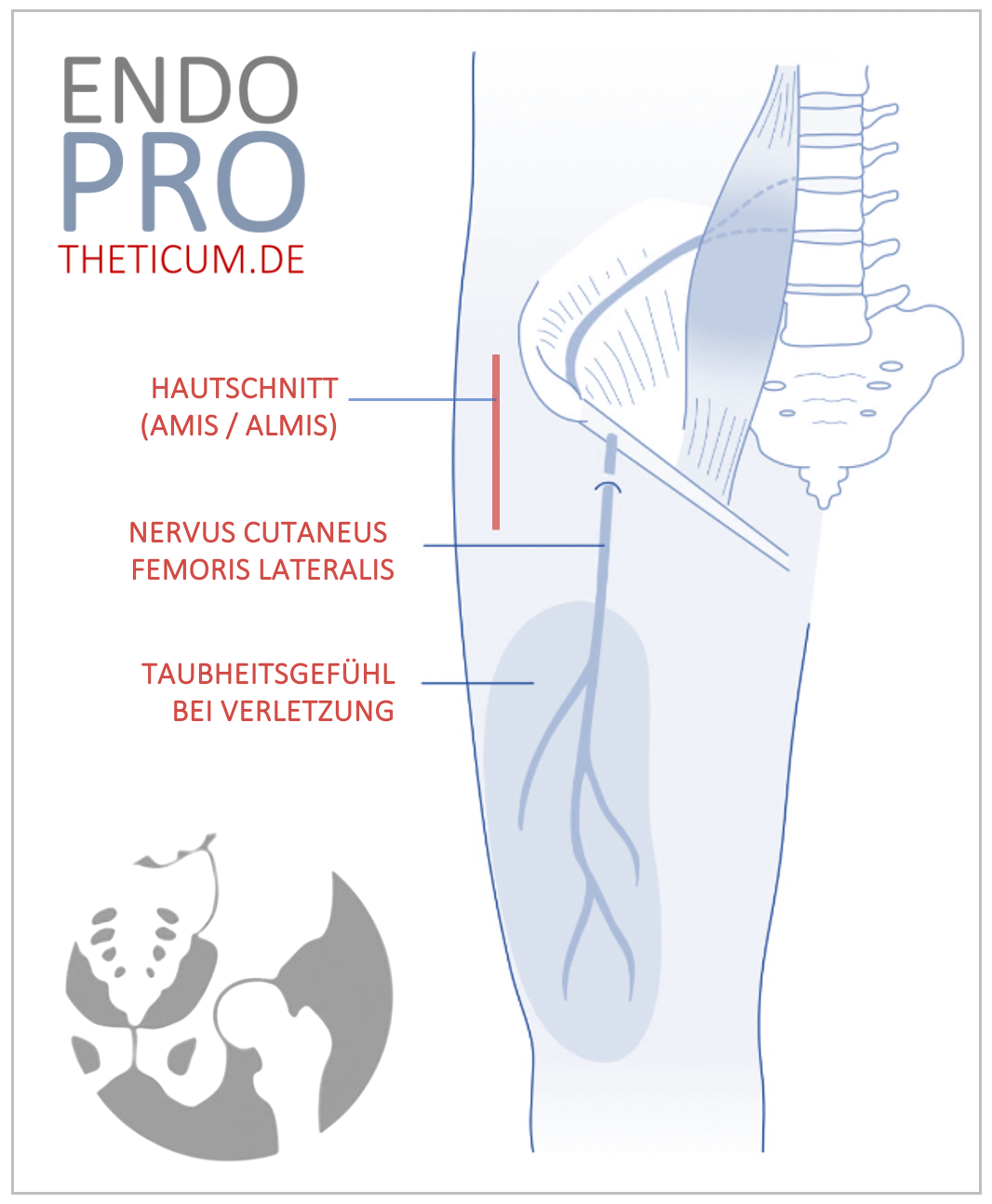
- Access to the hip joint: The hip joint is exposed through a surgical incision.
- Removal of damaged tissue: The damaged femoral head and parts of the acetabular rim are removed.
- Preparation of the bone: The bone is prepared to receive the prosthesis.
- Implantation of the prosthesis: The artificial acetabulum and femoral head are implanted and fixed.
- Wound closure: The surgical incision is closed, and healing can begin.
Postoperative rehabilitation after hip replacement for femoral head necrosis
Postoperative rehabilitation is crucial for the success of the hip replacement. The measures include:
- Early mobilization: The patient is encouraged to get up and make initial attempts to walk on the first day after surgery.
- Physiotherapy: Regular physiotherapeutic exercises to strengthen the muscles and improve mobility.
- Pain management: Adjusted pain medication to alleviate postoperative pain.
- Follow-up examinations: Regular checks to monitor the healing process and detect possible complications early.
Prospects and long-term results after femoral head necrosis
The success prospects of a hip replacement in cases of femoral head necrosis are generally very good. Most patients report a significant reduction in pain and a marked improvement in quality of life. Long-term results show that modern hip prostheses can have a lifespan of 15 to 20 years or more, depending on factors such as activity level and overall health.
Risks and complications
As with any surgical procedure, there are also risks and possible complications with hip replacement:
- Infections: Postoperative infections can impair healing and may require further interventions.
- Thrombosis: Blood clots can form after surgery, so prophylactic treatment is important.
- Prosthesis loosening: In rare cases, the prosthesis can loosen and require revision.
- Dislocation: The artificial hip joint can jump out of the socket, which may necessitate another operation.
Conclusion
Femoral head necrosis is a serious condition that can lead to severe impairments if left untreated. A total hip replacement (THR) offers an effective solution to alleviate pain and restore mobility. Through careful preparation, professional execution of the surgical intervention, and consistent postoperative rehabilitation, the chances of success can be significantly improved. Those affected should inform themselves comprehensively about the possibilities and choose the best treatment strategy together with Prof. Kutzner at ENDOPROTHETICUM.
Make an Appointment?
You can easily make an appointment both by phoneand online .


ENDOPROTHETICUM - The whole world of endoprosthetics