
Tennis after hip replacement: How to successfully return to the court
How tennis becomes possible again with hip replacement (hip TEP)

Active and sporty despite hip replacement
A hip prosthesis (hip replacement) does not mean the end of an active lifestyle. For tennis enthusiasts, however, the question arises: Is tennis possible after the implantation of an artificial hip joint? The answer is yes! Thanks to modern surgical techniques, innovative implants such as the short stem prosthesis, and good rehabilitation, 'return to play' is feasible for many patients. In this blog, you will learn which factors facilitate a return to sports, what precautions are necessary, and why short stem prostheses, in particular, can offer numerous benefits to tennis players.
What happens during hip replacement surgery?
Structure and Function of an Artificial Hip Joint
An artificial hip joint replaces the natural hip joint and typically consists of three parts:
- The prosthetic head: Usually made of ceramic or metal, it replaces the natural femoral head.
- The prosthetic cup: It is implanted into the pelvis and is usually made of resistant plastic or ceramic.
- The prosthesis shaft: This is anchored in the femur. Short shaft prostheses offer important advantages here.
Indications for a hip replacement
A hip replacement is usually performed for:
- Osteoarthritis (Coxarthrosis): Severe cartilage wear.
- Femoral head necrosis: Death of the femoral head bone.
- Fractures: After hip fractures. Implantation of an artificial hip joint becomes necessary when pain and limited mobility significantly impact daily life.
Is tennis possible with an artificial hip joint?
Physical activity after hip replacement
Many patients wonder if intensive sports like tennis are possible after hip replacement surgery. The answer is: With proper preparation and a well-fitting implant, tennis enthusiasts can continue their passion. According to studies, moderate to intensive exercise is usually unproblematic for prosthesis patients in the long term.
Benefits of sports after surgery
Regular physical activity after hip replacement:
- Improves prosthesis function: Strengthens muscles and improves coordination.
- Reduces pain: Mobility and stability of the hip are promoted.
- Increases quality of life: Tennis not only promotes physical health but also enhances social interaction and mental satisfaction.
(See also: "More Courage for High-Impact Sports after Short-Stem Hip Replacement")
The role of short shaft prosthesis in returning to tennis
What is a short stem prosthesis?
A short stem prosthesis is a modern hip implant characterized by a shortened stem. Unlike classical straight stem prostheses, it is not inserted deep into the femur (diaphysis), but rather held in the upper region of the bone (metaphysis). This offers several advantages:
- Bone preservation: Less substance loss.
- More natural biomechanics: The so-called 'anterior tilt' (natural inclination of the femur) is better replicated.
- Easier revision options: If a replacement is necessary, more bone is preserved.
Short stem prosthesis and tennis
The short stem prosthesis offers specific advantages for physically active individuals:
- Better freedom of movement: Anatomically correct reconstruction of the hip anatomy facilitates rotational movements.
- High Stability: Lower risk of dislocation under physical stress.
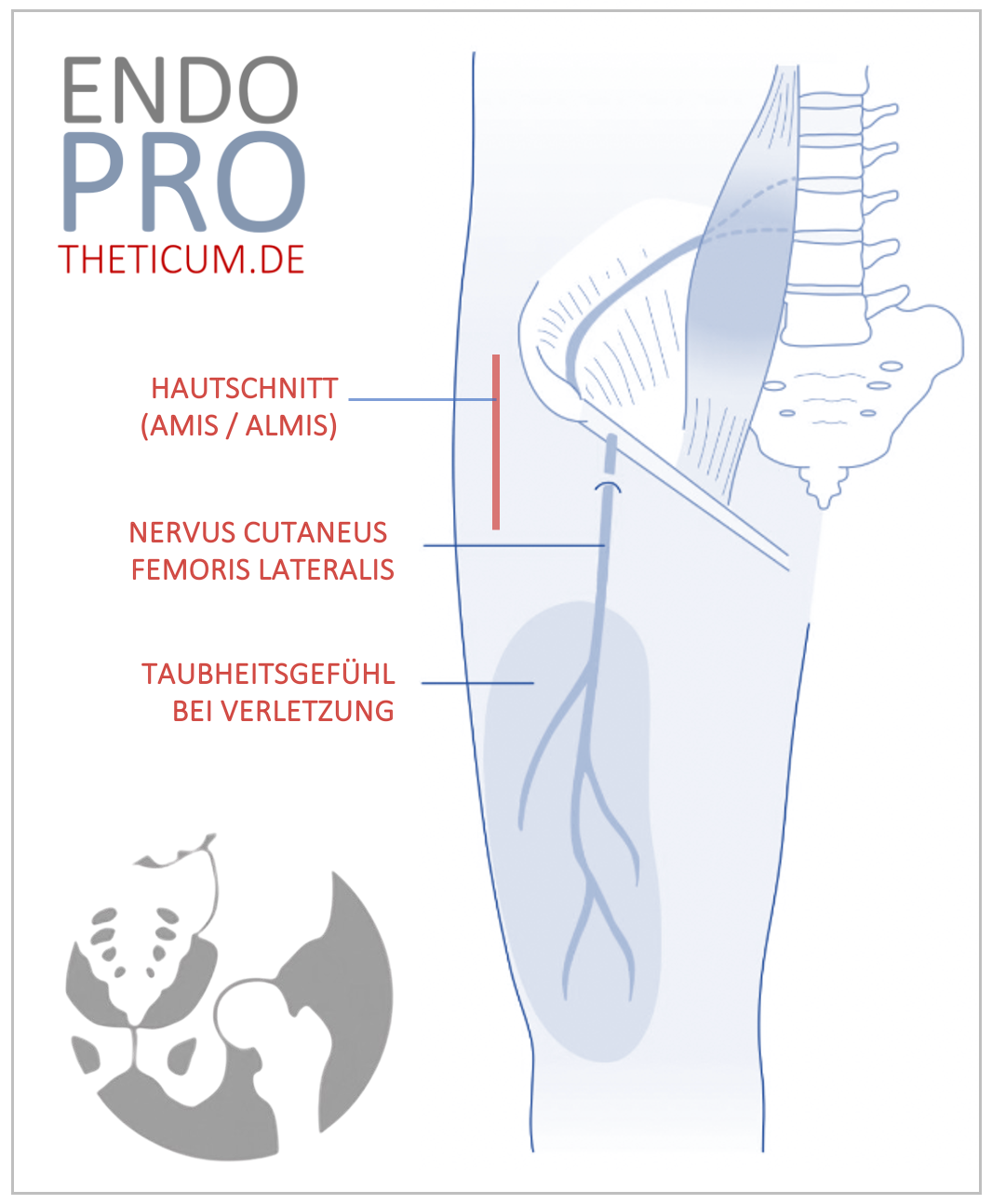
- Faster rehabilitation: Minimally invasive implantation techniques (such as ALMIS or AMIS) reduce soft tissue trauma.
Technique Tips: Tennis with an Artificial Hip Joint
Safe on the Court: Basic Recommendations
After hip replacement, it's essential to approach the return to sports slowly and in a controlled manner. Tips for tennis:
- Warm-up exercises: Mobilize the hip muscles and increase mobility.
- Gradual Load Increase: Start with controlled hitting drills before playing matches.
- Stabilization through training: Regular strengthening exercises for the hip musculature reduce the risk of dislocation.
Adjust Movement Patterns
The following points should be given special consideration:
- Control Rotational Movements: Avoid Sudden Changes of Direction.
- Pay attention to weight transfer: Always distribute the load evenly across both legs.
- Non-slip shoes: They reduce the risk of injury when stopping abruptly on the court.
The relevance of preoperative planning
Careful preoperative planning is crucial for the long-term success of the hip prosthesis. Digital techniques such as scaled X-rays can significantly contribute to determining the optimal stem length and inclination. Especially in athletic patients, anatomically correct positioning of the artificial hip joint can reduce risks such as leg length discrepancies or instabilities.
Conclusion: Back on the tennis court with a short shaft prosthesis
Tennis is not an unrealistic goal even after hip replacement surgery. Modern short-stem prostheses offer many advantages to physically active people through more natural biomechanics and increased safety. With good rehabilitation, conscious playing technique, and regular training, there is often nothing to prevent a return to the court. For optimal results, those affected should consult experienced specialists who master not only the right prosthesis but also the appropriate implantation techniques.
Make an Appointment?
You can easily make an appointment both by phoneand online .

ENDOPROTHETICUM - The whole world of endoprosthetics