Highly networked polyethylene: How it prevents loosening of endoprostheses in the future
Prevent loosening in endoprostheses: the secret of success of highly networked polyethylene
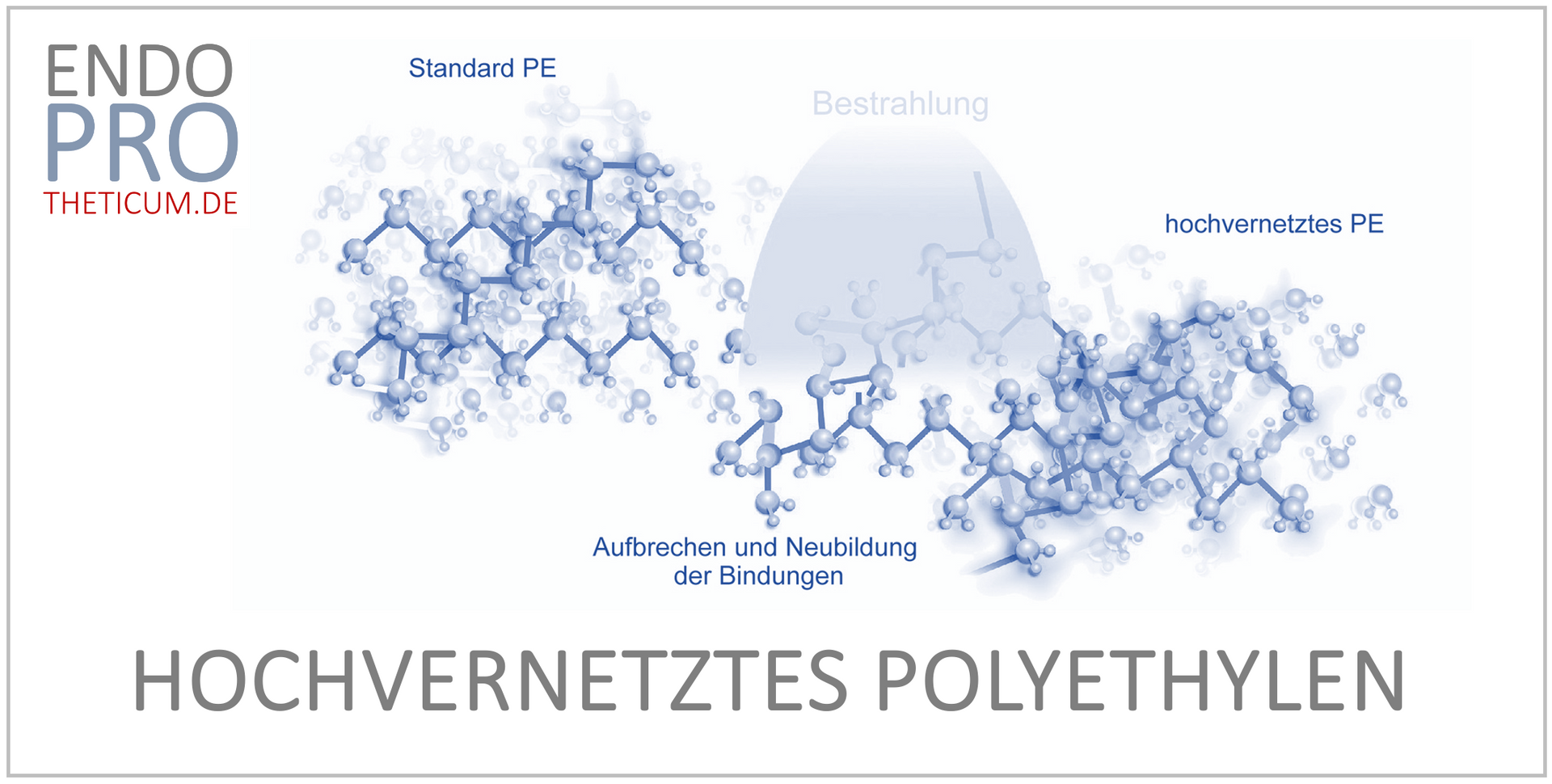
The development in endoprosthetics has made enormous progress in recent decades - one of the most important innovations is the highly networked polyethylene. It plays a crucial role in improving the longevity of hip and knee endoprostheses. In particular, the reduction in abrasion and the associated minimization of aseptic loosening are milestones of modern implant materials. But why is that? And how exactly does high -controlled polyethylene prevent these loosening? This comprehensive contribution illuminates the topic in detail.
1. What is highly networked polyethylene?
1.1 Definition and production
Highly networked polyethylene (HXLPE) is a modified form of conventional ultra -high molecular polyethylene (Uhmwpe). Targeted radiation (gamma or electron beam radiation) is networked. This creates stable cross -connections between the polymer chains. This networking significantly improves the mechanical properties of the material, in particular the abrasion resistance.
1.2 Advantages of networking
The main advantages of highly networked polyethylene are compared to conventional polyethylene:
- Reduced abrasion: Less particle formation that could trigger a loosening of the implant.
- Better mechanical stability: higher resistance to deformation and break.
- Longer shelf life: Longer lifespan of the implant due to lower material loss.
2. The polyethylene abrasion as the main cause of aseptic loosening
2.1 How is the polyethylene abrasion?
Abrite is created by the friction between the components of an implant- e.g. the metal or ceramic head of a hip prosthesis and the polyethylene pan. These small particles that deposit over time lead to an immunological reaction in the body. Macrophages try to reduce the particles, which leads to an inflammatory reaction. This in turn triggers bone breakdown (osteolysis), which means that the implant loses its stability.
2.2 Why conventional polyethylene failed
Polyethylene, as it used to be used, was less abrasion -resistant. It produced tiny particles over the years that attracted the surrounding tissue. This process accelerated bone loss, which was one of the main causes for the need for interchangeable operations.
3. Highly networked polyethylene compared to previous materials
3.1 Polyethylene 20 years ago
Before the introduction of the highly networked polyethylene, endoprostheses were equipped with conventional polyethylene. After about 10-15 years, these implants often showed the first signs of loosening, especially among younger and more active patients. The materials used at that time showed a higher abrasion - a factor that contributed significantly to the shortening of the implant life.
3.2 What has changed?
Highly networked polyethylene offers up to 90 % lower abrasion compared to conventional polyethylene. Due to the targeted networking of the material, the molecular structure becomes more stable, which creates fewer abrasion particles and the risk of aseptic loosening is drastically reduced.
4. Influence of the highly networked polyethylene on the durability of endoprostheses
4.1 Long standing times
Thanks to the improved polyethylene, the lifespan of endoprostheses is estimated to be significantly longer than 20 years. Clinical studies show that patients with highly networked polyethylene still have stable and well -functioning implants even after 15 to 20 years - even at high loads.
4.2 Less interchangeable operations
The reduction of abrasion particles also means drastic reduction in risk of osteolysis and loosening. This results in less necessary exchange operations, which is an enormous advantage, especially for young patients.
5. Further developments and future prospects
Material research does not stop. In addition to the networking of polyethylene, researchers are working on further improvements, for example on vitamin-based polyethylene, prevents oxidation and further increases long-term stability.
Conclusion: Highly networked polyethylene prevents loosening!
Highly networked polyethylene represents one of the most important innovations in endoprosthetics. It minimizes the abrasion, reduces the risk of aseptic loosening and significantly increases the lifespan of implants. Patients benefit from a longer durability of their prostheses and a lower probability of having to have an interchangeable operation. Highly networked polyethylene thus sets new standards in the longevity and safety of endoprostheses - and paves the way for an even more robust future of joint surgery.
MAKE AN APPOINTMENT?
You are welcome to make an appointment either by phone or online .


ENDOPROTHETICUM - The whole world of endoprosthetics